
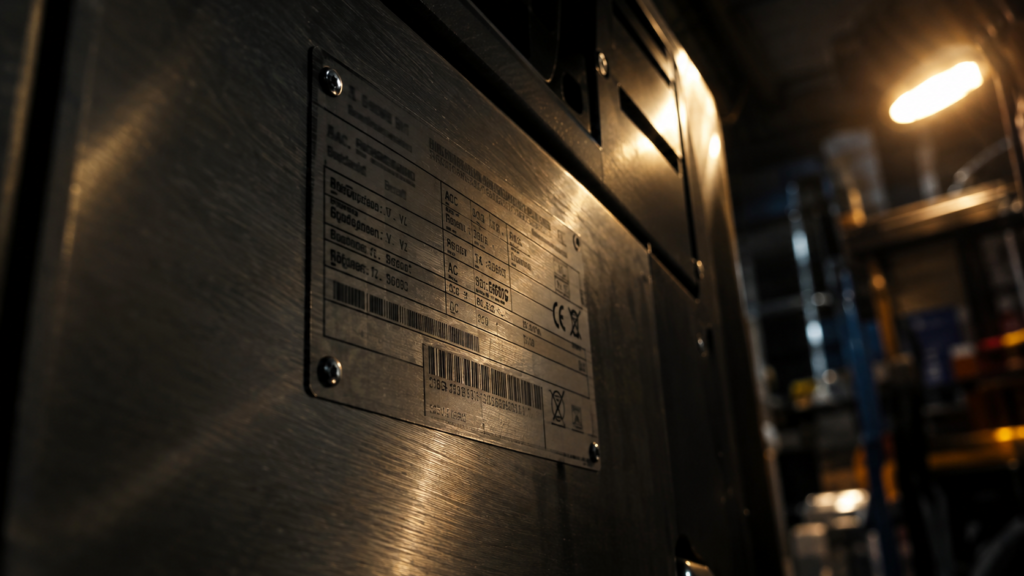
Two refrigerators, same size, same features, sitting on two different showroom floors, with two different model numbers — and neither store will tell you that’s on purpose.
This post contains affiliate links. If you click and buy, I may earn a small commission — at no extra cost to you.
Model Number vs SKU — Not the Same Thing
The first mix-up worth clearing up: a model number and a SKU are not the same thing, even though people use the terms interchangeably at checkout. The model number is assigned by the manufacturer and actually describes the appliance — its series, its configuration, its capacity. The SKU is assigned by the individual retailer for their own internal inventory system and means nothing to anyone outside that store. If you’re trying to compare an appliance across two retailers, the SKU is worthless for that. The model number is the thing you actually want.
How to Read the Three Parts
Every major brand structures its model numbers a little differently, but almost all of them break down into the same three functional sections.
Prefix — Product Line and Configuration
The first few characters identify the product line and the basic configuration. On a GE refrigerator, for example, the first one to three letters identify whether you’re looking at standard GE, GE Profile, Café, or Monogram, plus the door style — French door, side-by-side, bottom freezer. On a Whirlpool washer, a prefix like “WTW” identifies it as a top-load washer within a specific series. This is the part of the number that tells you what tier and configuration you’re actually looking at.
Middle Digits — Size and Features
The digits after the prefix typically encode capacity and feature set — cubic feet on a refrigerator, tub volume on a washer, whether a specific configuration includes an ice maker or convection. This is the part worth comparing directly between two units if you’re trying to confirm they’re actually the same size and spec, not just similarly named.
Suffix — Finish and Engineering Revision
The suffix, usually the last one to three characters, typically encodes color and finish — and this is also where things get easy to miss. Manufacturers issue new suffix codes whenever they make an internal engineering change during a model’s production run: a different control board, a different fan assembly, a different parts supplier. The base model number can look identical while the actual internal components differ meaningfully between two units. This matters most when you’re ordering a repair part — the suffix, not just the base model number, determines whether that part actually fits.
Why Two “Identical” Appliances at Two Stores Sometimes Aren’t
Here’s the part that isn’t an accident: manufacturers routinely create retailer-exclusive model numbers for major chains — a version of essentially the same appliance sold under a different model number at Home Depot than the nearly identical unit sold at Lowe’s or Best Buy. Both major home improvement chains operate price-match policies that require the model number, color, and specs to match exactly. Giving each retailer its own exclusive model number is a straightforward way to prevent a shopper from walking in with a screenshot of a lower price at a competitor and getting an exact match, because technically, by model number, it isn’t the identical item.
This isn’t a scandal or a scam — it’s a standard retail strategy, and it’s disclosed in plain language in both companies’ own price-match terms, which explicitly require identical model numbers, not identical-looking appliances. But it does mean the two units can be functionally the same appliance with the same core engineering and still not qualify for a price match against each other, simply because of how the model number was assigned.
What This Means When You’re Comparing Prices
If you’re trying to actually compare the same appliance across two stores, don’t stop at “this looks like the same fridge.” Check whether the model numbers match exactly, character for character. If they don’t, look up both model numbers on the manufacturer’s own site rather than the retailer’s product page — the spec sheet will tell you whether you’re looking at a genuinely identical unit with a cosmetic renaming, or an actual functional difference hiding behind similar marketing copy and photography.
What I Wouldn’t Do
I wouldn’t assume two appliances are identical just because they look the same in photos and carry the same brand and series name. Pull up both full model numbers side by side before you decide a price difference between two stores is unjustified — sometimes it’s the exact same unit under two labels, and sometimes it genuinely isn’t.
I also wouldn’t order a repair part using just the general model name off a sticker or a search result without confirming the full suffix. A part that fits one engineering revision of a model can be the wrong part entirely for a unit with a different suffix, even if both units sit on the exact same showroom floor under the exact same name.
THE BOTTOM LINE
A model number isn’t a random string — it’s the manufacturer’s own description of the appliance’s product line, size, features, and engineering revision, in that order. A SKU is a retailer’s internal inventory code and tells you nothing useful for comparison shopping. And when two “identical” appliances at two different stores carry different model numbers, that’s often deliberate — a way to sidestep price-match policies, not a sign the units are actually different. Read the full number before you assume either.
If you’re actively comparison shopping right now, our dishwasher buying guide is a natural next stop, and how GE’s own model prefixes work if GE’s naming specifically is what’s confusing you.
Cheers, Kazaan.