
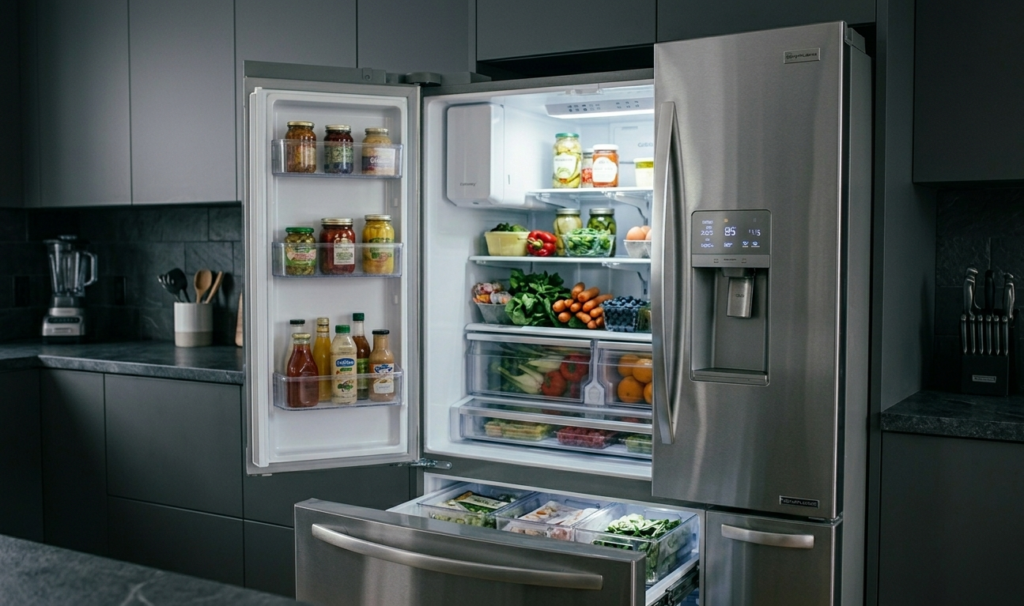
- 1. Capacity: The Number That Lies to You
- 2. Counter-Depth vs. Standard Depth: The Trap
- 3. The Compressor: The Only Spec That Can Cost You $3,000
- 4. Dual Cooling / Twin Cooling: Real Feature, Confusing Name
- 5. Energy Star: What It Actually Tells You (and Doesn’t)
- 6. The Ice Maker: Where You Lose More Than You Think
- 7. Smart Features and WiFi: Who Is This For?
- 8. Humidity-Controlled Crisper Drawers: Worth It
- My 3 Picks — French Door Refrigerators
- French Door Refrigerator Buying Guide: Final Decision Framework
- The Short Version
Dual evaporator twin cooling. Digital inverter compressor. Counter-depth trade-offs. None of that means anything until someone breaks it down in plain English — which is exactly what the spec sheet won’t do.
This post contains affiliate links. If you click and buy, I may earn a small commission — at no extra cost to you.
Neither does the salesperson — not really. A lot of it is marketing language dressed up as technical information.
I’ll cut through that. I’ll tell you which of the 8 specs actually matter, which ones you can safely ignore, and one piece of information most buyers never find out until it’s too late.
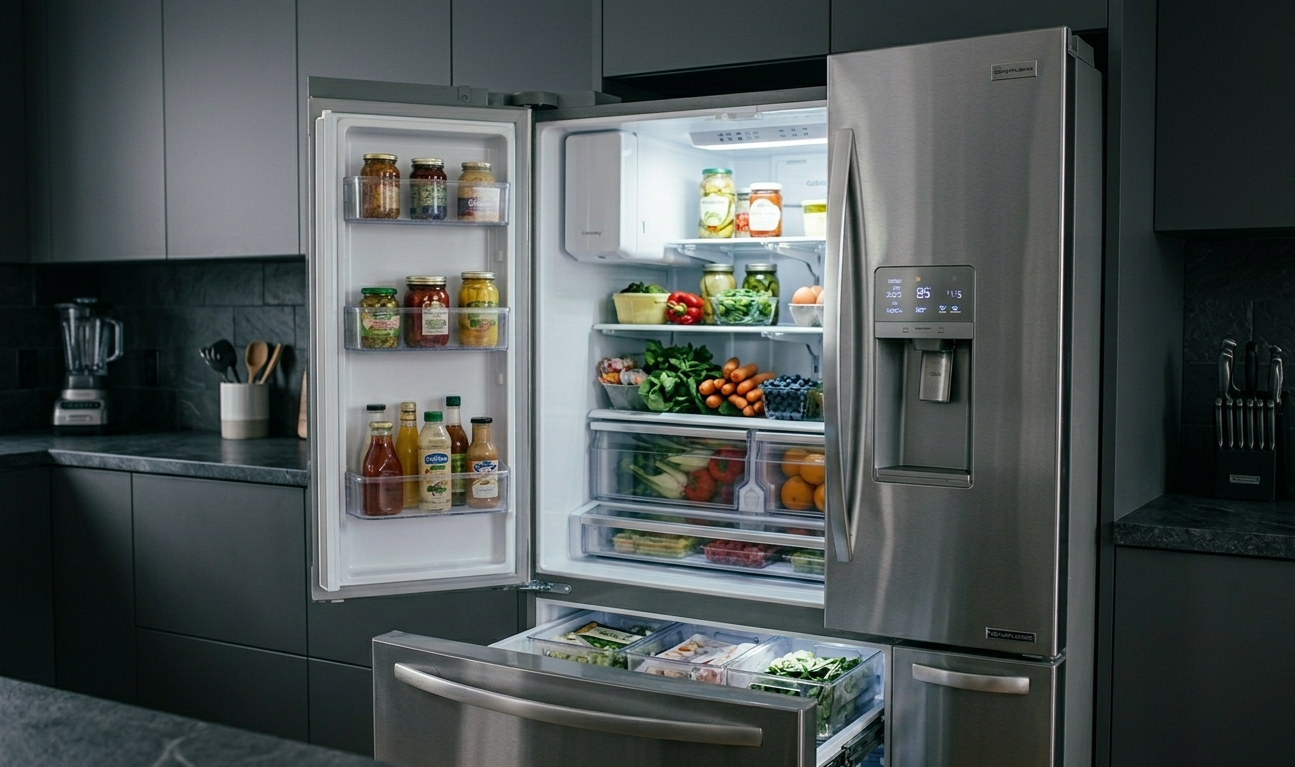
1. Capacity: The Number That Lies to You
Every French door fridge has a cubic feet number on the sticker. 28 cu. ft. sounds massive. 20 cu. ft. sounds small. Neither number tells you much without context.
Usable space is not the same as total capacity. Brands measure every cubic inch, including tight corners and door bins that hold nothing larger than a ketchup bottle. A 26 cu. ft. fridge from one brand may feel more spacious inside than a 28 cu. ft. model from another.
A simple starting point: For a household of 1–2 people, 18–20 cu. ft. is plenty. Add roughly 2–2.5 cu. ft. per additional person. A family of 4 is well-covered at 22–24 cu. ft. Bigger isn’t always better — it costs more, uses more energy, and often just means more empty space that’s harder to keep organized.
The number that actually matters here is width. Standard French door models come in 30″, 33″, or 36″ wide. Before you look at a single spec sheet, measure your kitchen opening, including clearance for doors to swing open fully. I’ve seen people buy beautiful refrigerators that don’t fit through the front door of their house.
2. Counter-Depth vs. Standard Depth: The Trap
“Counter-depth” sounds like a premium feature. It is — but it’s a trade-off most buyers don’t understand upfront.
Standard depth fridges stick out 4–6 inches past your countertop. Counter-depth models sit flush, giving your kitchen a cleaner, built-in look. They typically run between 23–24 inches deep versus 30–34 inches for standard models.
The trade-off: you lose capacity. A counter-depth 36″ French door might give you 22 cu. ft. where a standard-depth version of the same width gives you 27–28 cu. ft. You’re paying more for a smaller fridge — and manufacturers know the built-in look justifies a price premium of $300–600 in most cases.
Neither is wrong. Just go in knowing what you’re paying for.
3. The Compressor: The Only Spec That Can Cost You ,000
Here’s the thing no spec sheet will tell you straight — and the reason I always flag it.
The compressor is the heart of the refrigerator. It’s what keeps everything cold. And if it fails, you don’t just lose the food in your fridge — you lose the entire appliance, usually at the worst possible time.
What you’ll see on the box: inverter compressor, linear compressor, digital compressor. These are different technologies with different track records.
Inverter compressors (used by Samsung, Whirlpool, Bosch, GE and others) adjust their speed based on demand rather than cycling on and off. They’re quieter, more energy efficient, and in general have a solid reliability track record.
Linear compressors — primarily marketed by LG — are a different story, and this is the part of the conversation most salespeople won’t have with you.
The LG Compressor Situation
LG has faced multiple class action lawsuits in the US over defective linear compressors in their refrigerators. The first major settlement came in 2020, covering models manufactured between 2014–2017. LG paid affected consumers anywhere from $50 to over $3,500, depending on the damage.
The problem didn’t go away. As of late 2024 and into 2025, new lawsuits have been filed covering LG refrigerators manufactured since January 2018. The pattern is the same: linear compressors failing years before their advertised 10–20 year lifespan, food spoiling, and LG denying any systemic defect while quietly settling in court.
One owner reported going through five compressor replacements on the same refrigerator.
These are fridges priced between $1,800 and $7,500, sold at Best Buy, Home Depot, Costco, and Lowe’s.
I’m not telling you never to buy an LG. I’m telling you to go in with your eyes open, register your appliance immediately, understand your warranty coverage, and check whether the specific model you’re buying falls under any current or pending settlement.
You can read the details of the ongoing litigation here: Top Class Actions – LG Refrigerator Compressor Lawsuit
Warranty check: Whatever brand you buy, look for a compressor warranty of at least 5 years. Ten years is standard for better brands. If a brand offers only 1–2 years on the compressor, that’s a red flag.
4. Dual Cooling / Twin Cooling: Real Feature, Confusing Name
This one matters, and it’s buried in the specs.
Most basic refrigerators share one cooling system between the fridge and freezer sections. This means air circulates between the two, which can cause freezer odors to drift into your fresh food section — and vice versa.
Dual evaporator or twin cooling systems have two separate cooling units. The freezer and fridge operate independently. Result: better humidity control in the fridge section, less odor transfer, and produce that stays fresh longer.
If you cook a lot or buy fresh produce regularly, this is worth paying for. It typically adds $200–400 to the price but makes a noticeable difference in how long food lasts.
Brands will call this different things — Samsung calls it “Twin Cooling Plus,” LG calls it “Linear Cooling,” others call it “dual evaporator.” Look for “two separate evaporators” in the technical specs rather than the marketing name.
5. Energy Star: What It Actually Tells You (and Doesn’t)
Energy Star certification means the appliance meets EPA efficiency standards. It’s worth having. But This is where most buyers get it wrong.
Energy Star tells you the fridge is efficient relative to its size category. A 28 cu. ft. Energy Star fridge uses less energy than an average 28 cu. ft. fridge — but it may well use more energy than a 22 cu. ft. non-certified model.
The actual number to look at: the estimated annual energy consumption in kWh, found on the yellow EnergyGuide label. In the US, the average electricity rate is around $0.16 per kWh, so a fridge using 700 kWh/year costs you roughly $112/year to run. Compare models on this number, not just the Energy Star badge.
Biggest energy drain factors: ice makers (especially in-door ice systems), warm kitchen placement, old door seals, and putting the fridge next to a heat source.
6. The Ice Maker: Where You Lose More Than You Think
In-door ice makers — the kind where the ice dispenser is built into the door — have become standard on mid and high-end French door models. They’re convenient. They’re also a trade-off.
The ice-making mechanism takes up significant space inside the door, typically reducing upper fridge capacity by 3–5 cubic feet. That’s a meaningful chunk of storage that used to hold food.
Also worth knowing: ice makers are one of the most common repair calls on refrigerators. More complexity means more things that can break. If you rarely use ice, consider a model without one and use a standalone ice tray.
7. Smart Features and WiFi: Who Is This For?
Almost every fridge over $1,200 now has WiFi and a companion app. You can get alerts when the door is left open, see inside with a camera, and adjust temperature from your phone.
I’ll be straight with you: most people use these features for about two weeks after purchase.
My honest take: don’t let smart features drive your decision. Pick based on the core specs — compressor, capacity, cooling system. If smart features come along at a price you were already paying, fine. Don’t pay up for them. (The same logic applies to other appliances — see my air fryer buying guide for how I approach these decisions.)
8. Humidity-Controlled Crisper Drawers: Worth It
Standard crisper drawers keep produce separated. Adjustable humidity drawers let you set one drawer to high humidity (for leafy greens and herbs) and one to low humidity (for fruits that emit ethylene gas and can cause nearby produce to rot faster).
If you throw away a lot of produce, this feature will pay for itself quickly. It’s usually found on models over $1,200–1,500. Look for “dual humidity control” or “adjustable humidity crispers” in the features list.
My 3 Picks — French Door Refrigerators
Best Budget: Kenmore Counter-Depth French Door (~$1,700)
👉 20.3 cu ft, fingerprint-resistant stainless, and a quiet inverter compressor — the compressor type that matters most per the section above. Counter-depth fit without the premium-brand price tag.
Check Price on Amazon →
Best Overall: GE GFE24JYKFS Standard Depth (~$2,600)
👉 23.7 cu ft standard depth — more usable capacity than counter-depth models at a similar price. Fingerprint-resistant stainless, and GE’s compressor track record doesn’t carry the lawsuit history discussed above.
Check Price on Amazon →
Best Premium: Whirlpool 4-Door Counter-Depth (~$3,400)
👉 19.1 cu ft, 4-door layout with deli drawer, in-door ice and water, adjustable shelves. If you want counter-depth without giving up organization options, this is the upgrade tier.
Check Price on Amazon →
French Door Refrigerator Buying Guide: Final Decision Framework
Before you go to the store or hit Amazon, answer these four questions:
- What’s my kitchen opening? Measure width and depth clearance first. Don’t skip this.
- Standard or counter-depth? Decide based on your kitchen layout, not what looks nice in the showroom.
- What’s my budget — and how much of it goes to peace of mind? A cheaper fridge with a short compressor warranty is not a bargain.
- Do I need the ice maker, smart features, or dual cooling? Be honest. Buy what you’ll use.
If you’re shopping on a budget ($800–1,200), a solid bottom freezer or a basic French door from Whirlpool or GE with a standard inverter compressor and a 5-year compressor warranty will serve you better than a feature-loaded model from a brand with compressor history issues.
In the $1,200–2,000 range, Bosch, Samsung, and GE’s mid-tier lineup offer good dual evaporator options with reliable compressors and solid build quality.
Over $2,000, you’re entering premium territory where Bosch counter-depth models, GE Profile, and Samsung‘s Bespoke line offer real differentiation. At this price, also look at Café by GE — good reliability, excellent design, strong resale on the US market.
The Short Version
Focus on 3 things: compressor technology and warranty, actual interior capacity versus your household size, and whether the cooling system is designed to keep food fresh or just cold.
Get those three right, and the rest is just extras.
THE BOTTOM LINE: Capacity numbers and counter-depth marketing distract from the spec that actually costs you money: the compressor. Check for at least a 5-year compressor warranty — 10 years is standard for better brands. Standard depth gets you more usable capacity for the same money; counter-depth costs more for a flush-fit look. Measure your kitchen opening before you fall in love with a model. Most of these are available on Amazon. If you’re not on Prime yet, try Prime free for 30 days — the free shipping alone usually pays for itself within two orders.
From Kazaan
New guides, before they hit Google.
No sponsored content. No affiliate-first takes. Just the stuff that actually helps you decide.
Pingback: How To Choose A Dishwasher: 3 Questions, Any Budget
Pingback: Portable AC Buying Guide: Why The BTU Number On The Box Is Lying To You | Food Unites People
Pingback: Best Time Of Year To Buy Appliances (Save The Most)
Pingback: Whirlpool Vs GE Vs Samsung: Brand Breakdown 2026