
Walk into any Best Buy right now and ask yourself: is Ninja worth it, or are you just reaching for it before you’ve even read the price tag? I’ll bet you $20 it’s the latter.
This post contains affiliate links. If you click and buy, I may earn a small commission, at no extra cost to you.
In this post
That’s not an accident. That’s $700 million a year doing its job.
SharkNinja, the company behind the brand, spent somewhere around $585 million on advertising in 2024 alone. TV spots, influencer deals, product placements, the Brad Pitt F1 movie. For 2025, they pushed that number closer to $700 million. Do the math and it works out to roughly $1 of every $10 you spend on a Ninja product going straight back into the machine that made you want it in the first place.
Again, not a criticism. That’s just how consumer brands at this scale operate. But it’s worth knowing before you stand in front of a shelf and instinctively grab the Ninja over the $40-cheaper Cosori sitting right next to it.
Here’s what that means on the shelf. Advertising doesn’t float above the product as a separate budget. It sits inside the price. A brand spending at that scale needs a shelf price that carries the spend, and one that doesn’t undercut the premium image it paid to build. That’s why a Ninja rarely sits at the bottom of its category, even when the machine beside it is built around the same basic parts.
So What Are You Actually Getting?
Here’s the part that might surprise you: Ninja products are genuinely good. This isn’t a story about smoke and mirrors. It’s a story about a solid product that costs more than it has to.
The design is consistently thoughtful. Controls feel intuitive in a way that cheaper competitors often miss. The dual-basket DualZone technology, where you cook two different things at two different temperatures simultaneously, is a real innovation, not a marketing gimmick. Build quality holds up. Warranties get honored. Customer service is better than the industry average, which in this category is a low bar, but still.
The cooking performance? Reliable. Consistent. Good.
Not dramatically better than a Cosori at the same price point, but not worse either. Which circles back to the core question: is Ninja worth it at this price point, compared to what’s sitting next to it on the shelf?
Why do the results converge? An air fryer is a heating element, a fan and a basket. There is only so much room to be better. Once the airflow is decent and the temperature control is accurate, two machines of the same capacity give you the same fries. The real differences are in basket coating, fan noise, how the controls feel and how long the nonstick lasts. Those are worth reading reviews for. Labels like “rapid air technology” are not. I broke down the one number that does get overhyped in my air fryer wattage post.
Where the Premium Stops Making Sense
At the entry level, the gap between a $79 Ninja and a $65 Cosori is mostly logo and color palette. The air comes out the same temperature. The fries taste the same. If you’re buying a basic single-basket fryer for occasional use, you are paying for brand recognition and nothing else.
Do the arithmetic. A $14 to $17 gap on a $65 to $73 machine is roughly 20 to 23 percent. Spread over five years of normal use, that’s about $3 a year. So the entry-level premium isn’t a rip-off. It’s a small tax for a familiar logo. The mistake is believing it buys performance. If you want to pay it for peace of mind, fine. Just don’t tell yourself the Ninja cooks better.
At the higher end, the math gets more complicated. Ninja’s multi-function appliances (the Ninja Combi, the Ninja Speedi, the Foodi lineup) cost real money for combining multiple cooking methods in one unit. The convenience is genuine. Whether it’s worth $200+ depends entirely on one honest question: will you use all those functions, or are you paying for the version of yourself that would?
Most people pay for the version of themselves that would.
Here’s the number that settles the bigger question. Take the Speedi at $249.95. A 5-quart Cosori at $72.99 plus a standalone electric pressure cooker in the $80 to $100 range comes to roughly $153 to $173. So the Speedi premium is about $77 to $97, and what you get for it is one footprint on the counter instead of two, plus one set of controls. If your kitchen is small, that’s a fair trade. If you have the space, it’s mostly convenience pricing. Prices move, so check current numbers before you do this math yourself.
The Model Lineup Is a Mess
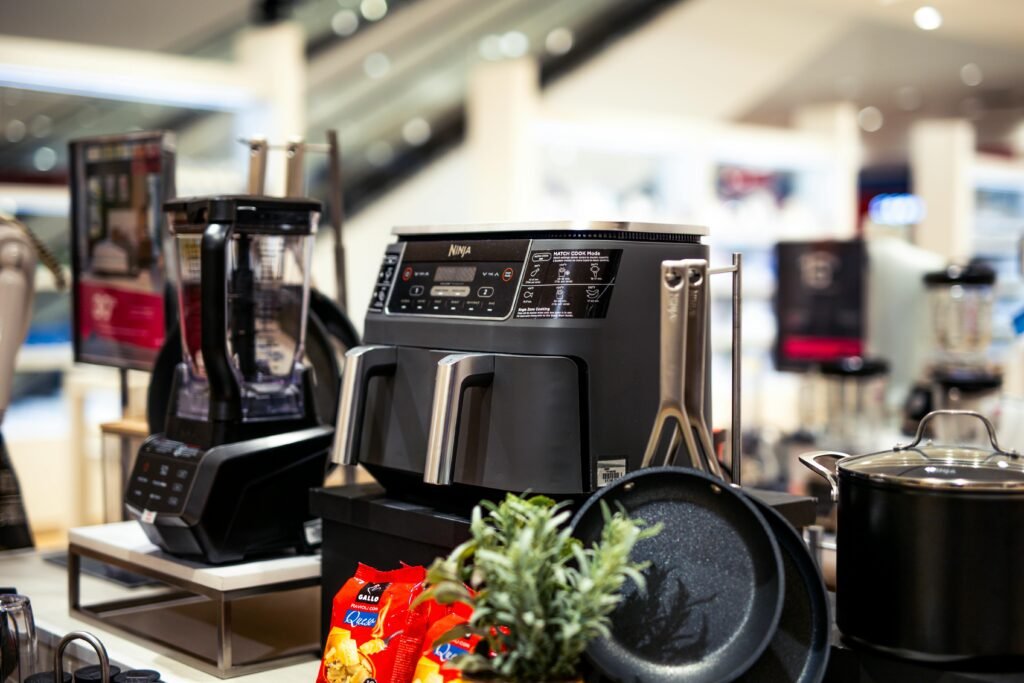
SharkNinja launches around 25 new products a year. That sounds impressive until you realize what it means for you as a buyer: a lineup of 40+ appliances where half the models overlap, the naming system tells you almost nothing (what exactly is the difference between a Foodi and a Speedi?), and the model you buy today might be quietly discontinued in 18 months.
Compare that to Breville or De’Longhi, where each product in the lineup has a clear identity and a longer shelf life. Ninja’s approach is volume and velocity. It works commercially, but it creates real noise for anyone trying to make a rational decision.
This matters more than it sounds. A review written for last year’s model can describe a machine that no longer exists. Accessories and replacement baskets can get harder to find once a model is retired. And the “was” price printed next to a sale tag is often the highest price the unit was ever listed at, not what it normally sells for. Before you buy any Ninja, match the exact model number to the review you’re reading, then look at the price history, not the sticker.
What the Same Money Buys You Right Now in the US
This is the comparison most review sites skip. Here’s the reality at three price points you’ll actually see on Amazon and at Best Buy:
Around $70–80: Ninja AF101 vs. Cosori Pro II. Same basket size (4 qt), similar wattage, nearly identical results in side-by-side cook tests. The Cosori is usually $10–15 cheaper. The Ninja has slightly better build feel. That’s genuinely the whole difference.
👉 Ninja AF101 Air Fryer, 4Qt, $89.99
The entry-level Ninja everyone reaches for first. Solid build, simple controls, no real cooking advantage over the Cosori below.
Check Price on Amazon →
👉 COSORI Pro II Air Fryer, 5Qt, $72.99
Same basket range, same results, usually $15-20 cheaper than the equivalent Ninja. This is the honest comparison this post keeps pointing to.
Check Price on Amazon →
Around $100–120: Ninja AF161 (2-basket) vs. Instant Vortex Plus. Both handle larger families. The Ninja DualZone feature is legitimately better here. Cooking two things at different temps simultaneously is useful, not gimmicky. If that matters to you, the premium is earned.
$180 and up: This is where Ninja pulls ahead on innovation. The Combi and Speedi have no real equivalent at the same price. Breville gets close with the Smart Oven Air Fryer, but at $50–100 more. If you’re spending this much, Ninja often wins on value.
👉 Ninja Speedi 10-in-1 Rapid Cooker, $249.95
This is where Ninja earns the premium: no direct Cosori equivalent at this price that pressure cooks and air fries in one unit.
Check Price on Amazon →
The pattern: Ninja earns its price at the high end. At entry level, you’re mostly paying for the name.
A Simple Way to Decide
Forget the brand for a minute. Start with how you actually cook, then find the row that fits.
- Cooking for one or two, air frying a few times a week: buy the Cosori and keep the $14 to $17.
- Cooking for four or more, and you regularly need two foods at different temperatures: the DualZone Ninja earns its premium, because the alternative is cooking in two rounds and serving the first round cold.
- Short on counter space, and you’d otherwise buy a pressure cooker plus an air fryer: the Speedi is a fair trade at roughly $77 to $97 for one footprint instead of two.
- You trust the brand’s service and don’t mind paying a little for that: it’s a legitimate reason. Just name it as the reason.
- None of these sound like you: you probably don’t need a Ninja at all.
What I Wouldn’t Buy
The $249.95 Speedi if you’ll mostly air fry. You’d pay about $175 more than a $73 Cosori for a pressure cooker you never open. Multi-function machines only pay off when you use the functions.
Any Ninja on the strength of a “was” price. A crossed-out number tells you the highest price the unit was ever listed at. It doesn’t tell you what it normally sells for. Check the price history before you believe the discount.
A model I can’t match to a review. With around 25 launches a year, a glowing review can describe last generation’s machine. If the model number on the box doesn’t match the one in the review, treat the review as a rumor.
The Honest Take: Is Ninja Worth It?
Before you buy any Ninja product, spend five minutes looking at the Cosori, Instant Vortex, or Breville equivalent in the same category. The specs will often match. The price will usually be lower. The result on your counter will be nearly identical.
If you look at both and still choose Ninja, whether for the design, the ecosystem, or the straightforward confidence of buying a brand you recognize, that’s a completely reasonable call. Plenty of people make it and never regret it.
The difference is making that choice on purpose, not by default.
That’s what this site is here for: helping you answer “is Ninja worth it?” for your specific situation, not the average one.
Comparing other appliances too? Read What Blender Wattage Actually Means
Ninja earns its premium where a second basket or a combined cooker changes how you cook. At entry level you’re paying a small tax for the logo, about $3 a year, and it buys no extra performance. Decide by how you cook, then check the Cosori next to it before you pay.
Cheers, Kazaan
Pingback: Best Coffee Maker Easy To Clean (2025) — 3 Picks That Won't Make You Hate Mornings