
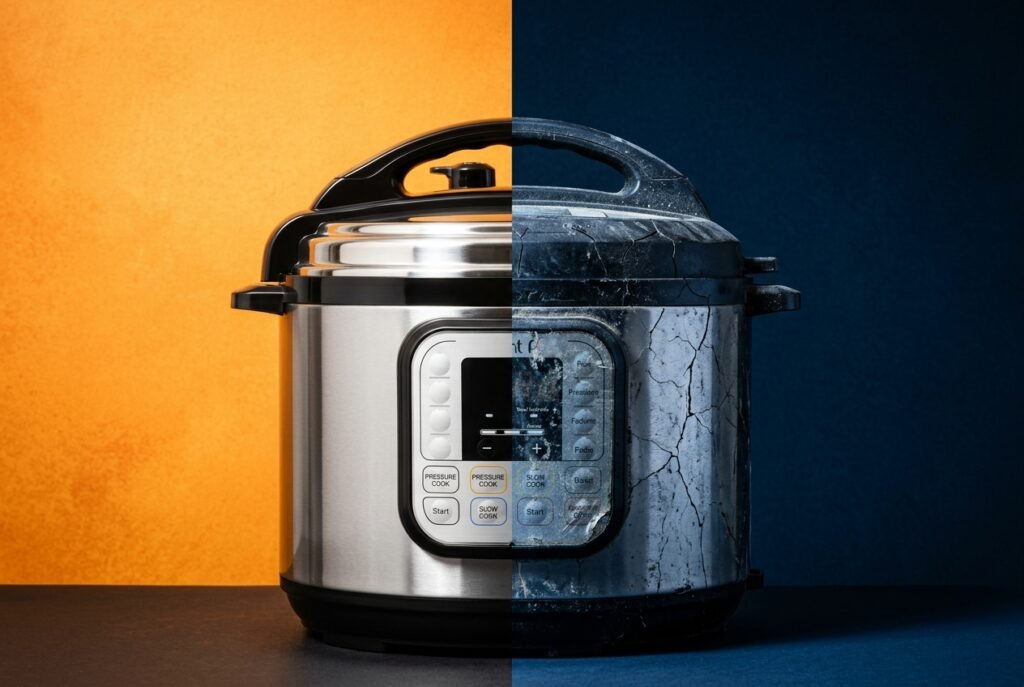
Pyrex and Instant Pot haven’t shared an owner since 2024 — the bankruptcy that made headlines in 2023 actually split the two apart for good, and most people buying either one today don’t know that.
This post contains affiliate links. If you click and buy, I may earn a small commission — at no extra cost to you.
What Actually Happened, in Plain Terms
Instant Brands — the company that had owned Instant Pot, Pyrex, CorningWare, Corelle, Snapware, Visions, and Chicago Cutlery under one roof since 2019 — filed for Chapter 11 bankruptcy in June 2023, listing $500 million to $1 billion in liabilities. The company kept operating throughout the process, which is standard for a Chapter 11 filing, and secured $132.5 million in financing to fund itself while it restructured. This wasn’t a sudden collapse or a liquidation — it was a debt restructuring, and the difference matters for what happened next.
Who Owns Instant Pot Now — And It’s Not Who You’d Guess
After a competitive bankruptcy auction, private equity firm Centre Lane Partners acquired Instant Pot as its own standalone business in late 2023, with the sale finalized in 2024. Instant Pot now operates independently — not as part of a larger houseware conglomerate anymore — under new leadership that includes a CEO, Chris Robins, who previously ran Newell Brands’ home appliance division, along with other executives who joined from the same background. That’s a genuine change in both ownership structure and leadership, not a cosmetic rebrand.
👉 Instant Pot Pro Multi-Use Pressure Cooker, 8 Qt
the current flagship under the post-bankruptcy Centre Lane ownership — 10 cooking functions including sous vide, and the model most current independent testing points to for consistency and reliability in 2026.
The Pyrex Side Split Off Separately
Here’s the part that surprises people: Pyrex, CorningWare, Corelle, Snapware, and Chicago Cutlery didn’t go to Centre Lane Partners at all. That side of the business was reorganized separately under new lender-controlled ownership as part of the same bankruptcy proceeding, approved by the bankruptcy court in early 2024. If you buy a Pyrex dish today, you’re buying from a genuinely different company than the one that makes your Instant Pot, even though both brands spent years marketed under the same parent umbrella and still get discussed together out of habit.
Separately, and unrelated to the bankruptcy itself: the FTC previously ordered Instant Brands to stop claiming Pyrex products were made in the U.S., since many Pyrex cups are actually manufactured in China. Worth knowing if country-of-origin factors into your bakeware purchase, though it’s a labeling issue from before the restructuring, not a consequence of it.
Why the Bankruptcy Happened At All
The filing wasn’t really about product quality or brand mismanagement — it traces to two separate financial pressures landing at once. Tightening credit terms and higher interest rates made the company’s existing debt structure unsustainable, on top of a genuine demand collapse in the electric pressure cooker category specifically: multicooker device sales fell roughly 50%, from about $758 million in 2020 to $344 million in 2022, as the initial Instant Pot boom that peaked during the pandemic-era home cooking surge faded. A company that had taken on debt assuming that growth would continue got caught when it reversed.
👉 Instant Pot Duo Plus, 6 Qt
the versatile mid-tier model — 9-in-1 functionality and dishwasher-safe parts — representing the core lineup that’s kept selling steadily through the restructuring, independent of the flagship Pro’s added features.
Is Product Quality Actually Different Now?
Based on independent testing through 2026, no meaningful decline shows up. Current reviews continue to rate Instant Pot’s core lineup — Duo, Duo Plus, Pro, Rio — well on reliability and consistency, and the specific engineering that made the original product popular (accurate pressure control, consistent results across repeat use) hasn’t visibly regressed under the new ownership. The leadership change specifically brought in appliance-industry operating experience rather than a purely financial restructuring team, which is generally a positive signal for a company trying to stabilize a consumer product business rather than strip it for parts.
👉 Instant Pot Rio, 6 Qt
the current entry-level model in the post-restructuring lineup — a straightforward 7-setting cooker that represents the accessible end of the brand now that it’s operating independently of the broader Instant Brands portfolio.
Decision Framework
Buy an Instant Pot if you want a multicooker specifically — the brand’s post-bankruptcy ownership is stable, current models test well, and the core engineering that built the brand’s reputation hasn’t changed.
Be aware, separately, that Pyrex, CorningWare, and Corelle are now a different company than Instant Pot, even if you’re used to thinking of them as one brand family — that matters if you’re deciding where to direct brand loyalty or comparing warranty and customer service experiences across the two.
What I Wouldn’t Buy
I wouldn’t avoid Instant Pot specifically because of bankruptcy headlines from 2023 — the company that makes the product today is a different, restructured, and by most available evidence more financially stable entity than the one that filed, and the product itself hasn’t shown a quality regression in current testing.
I also wouldn’t assume Pyrex and Instant Pot still share quality control, customer service, or manufacturing standards just because they’re still discussed as sister brands out of habit — they’ve been separately owned since 2024, and treating them as one brand for purchasing decisions is outdated information.
THE BOTTOM LINE
Instant Brands’ 2023 bankruptcy wasn’t a product-quality failure — it was a debt and demand-collapse problem that led to a genuine restructuring, not a liquidation. Instant Pot came out the other side as a standalone company under Centre Lane Partners, with new appliance-industry leadership and no visible quality decline in current independent testing. Pyrex and the rest of the original portfolio went to a different ownership group entirely. If you’re deciding whether to still buy an Instant Pot, the bankruptcy itself isn’t a good reason to avoid it — the current product and company are worth evaluating on their own, separate from the 2023 headlines.
If you’re deciding between categories entirely, our Instant Pot vs air fryer comparison covers that comparison, and our juicer worth-it breakdown walks through a similar single-purpose-appliance question.
Cheers, Kazaan.